A DIY recharge can mask bigger problems. Here's what really causes warm AC and when to bring it in.
When the AC stops cooling, most people reach for a recharge can. Sometimes that works for a few weeks — but it almost always masks the real issue and can damage the system long-term.
Automotive AC is a sealed, precision system. Understanding how it actually works makes it much easier to see why a quick recharge is rarely the right answer.
How Automotive AC Actually Works
Your AC doesn't make cold — it moves heat. The compressor pressurizes refrigerant, the condenser releases that heat to the outside air, the expansion valve drops the pressure suddenly, and the evaporator inside the dash absorbs heat from the cabin air. Any blocked airflow, low charge, electrical fault, or mechanical failure in that loop shows up as warm air at the vent.
Refrigerant Doesn't Just Disappear
A sealed AC system shouldn't lose refrigerant. If it's low, there's a leak — period. Recharging without finding the leak just lets refrigerant escape again, often along with the oil that lubricates the compressor.
Running an AC system low on refrigerant also runs it low on oil, which is the fastest way to kill a compressor. A $40 can of refrigerant today can easily become a $1,500–$2,500 compressor job later.
Other Common Causes
Beyond low refrigerant, warm AC often comes from:
- Failed AC compressor or compressor clutch
- Clogged expansion valve or orifice tube
- Blocked condenser airflow (bugs, leaves, debris between the condenser and radiator)
- Failed blower motor or blower motor resistor
- Electrical faults in the AC control circuit or pressure switches
- Cabin air filter completely clogged
- Failed blend door actuator stuck in the heat position
Why DIY Recharge Cans Can Backfire
Most over-the-counter recharge kits include sealant that can clog tiny orifices in the system — and contaminate the recovery equipment in any shop that later services your vehicle. Some shops won't touch a system that's had stop-leak in it.
Many cans also overfill the system, which actually reduces cooling and can damage the compressor by sending liquid refrigerant into a pump designed for vapor. The little gauges on the can don't measure charge accurately on a hot day either.
The Right Way to Fix It
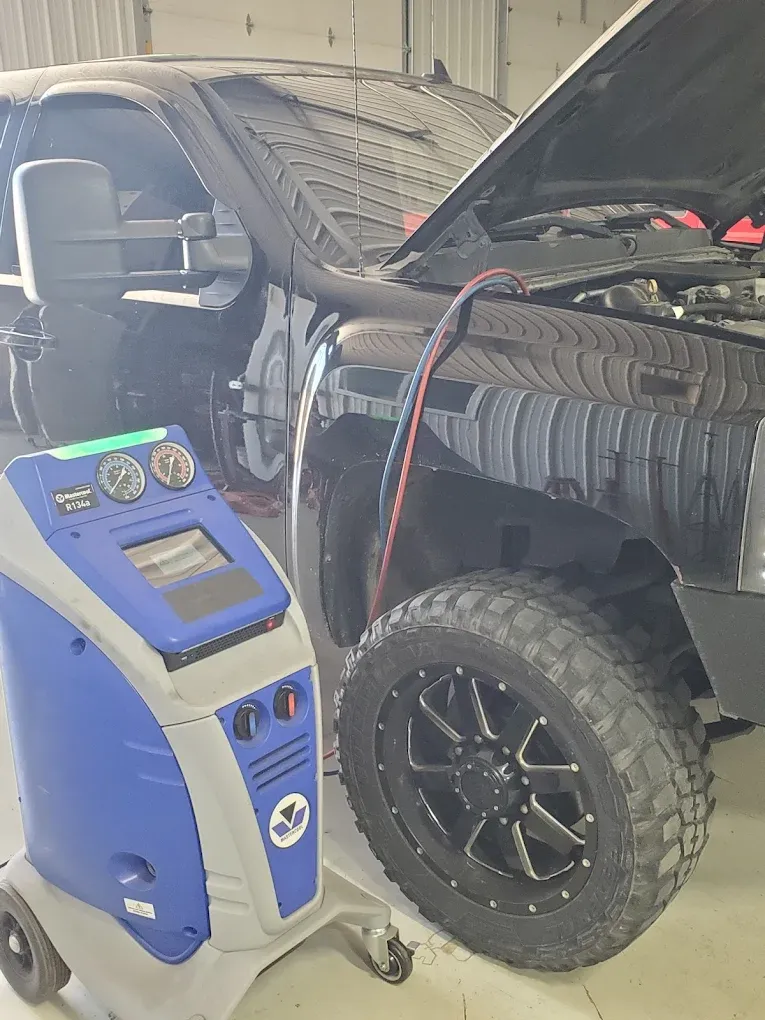
A proper AC service includes leak detection (UV dye, electronic sniffer, or nitrogen pressure test), system evacuation to remove old refrigerant and moisture, and a precise refrigerant charge measured by weight to manufacturer specification. If a leak is found, it gets fixed before any refrigerant goes back in.
That's how AC stays cold for years — not weeks. If your AC isn't keeping up, bring it in early. Catching a small leak now is much cheaper than replacing a compressor next summer.
Have questions about your vehicle?
Contact Grizzly →